

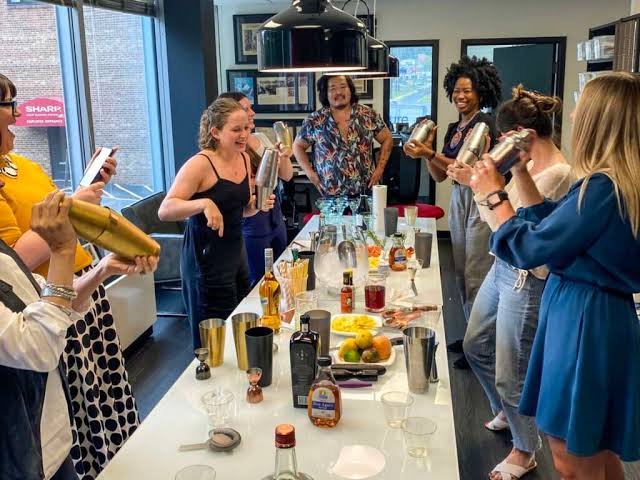
About 72 hours after your last company event, most attendees couldn’t tell you a single thing that happened. They remember the parking situation. Maybe the lukewarm chicken. That’s it. You spent thousands of dollars and months of coordination on something that evaporated by the weekend, and you already know you’re going to do it all over again in six months.
The problem isn’t budget. It isn’t the venue. It’s that most corporate events are designed to be attended, not experienced. Those are two very different things, and the gap between them is where your reputation as an event planner either gets built or quietly erodes.
Here’s what actually separates a memorable event from a forgettable one, and how to close that gap before your next one goes out the calendar invite.
Why “Good Enough” Is Killing Your Events
There’s a brutal truth sitting inside Gallup’s research: global employee engagement fell to just 20% in 2025, the lowest level since 2020, according to the Gallup State of the Global Workplace 2026 report. That number matters for event planners because disengaged employees don’t show up mentally even when they show up physically. A generic event designed for a captive audience is exactly the wrong tool for a workforce that’s already halfway checked out.
The events that cut through that disengagement share one trait: they make the attendee feel like the point of the whole thing, not just a body filling a chair. Generic icebreaker games, PowerPoint recaps, and branded stress balls do the opposite. They signal that the event exists for the company’s benefit, not the employee’s.
My opinion? If your event agenda could apply to any company in any industry with a simple find-and-replace on the logo, start over.
The MEMO Framework: Four Questions Every Event Should Answer
Over time, the events that get referenced in “remember when we…” conversations tend to score well on four dimensions. I call it the MEMO Framework:
- Moment: Is there a single peak experience people will describe to someone who wasn’t there?
- Earned: Did the experience feel like a genuine thank-you, not a checkbox?
- Multisensory: Did it engage more than one sense? Sight and hearing alone are forgettable. Touch, scent, and taste are not.
- Opt-in energy: Could people choose their level of participation, or were they corralled through a program like livestock?
Run your last event against those four questions honestly. Most corporate events fail at least three of them. The goal isn’t to score perfectly on every point; it’s to make sure you hit at least two of them hard enough that the event builds its own word-of-mouth.
Forget the Swag: What Actually Creates the Peak Moment
Here’s a scenario that plays out constantly. Company spends $8,000 on branded backpacks, notebooks, and water bottles. Employees say thank you, stuff it all under their desks, and forget everything within a week. Same company spends $3,000 on an on-site spa experience. Three weeks later, those employees are still telling their friends about it.
Physical objects have almost zero emotional stickiness compared to experiences that involve the body. That’s not a wellness claim; it’s just how memory consolidation works. When something activates your nervous system positively, the brain tags it as worth keeping. A branded tote bag doesn’t do that.
When you’re building your event’s peak moment, think about what makes someone physically pause and say “oh, wow.” For corporate retreats, health fairs, and team appreciation days, the decision to book a mobile spa for your next event consistently lands in that territory because it’s unexpected, personal, and multisensory in exactly the way that sticks. A chair massage at a trade show booth creates a stronger memory trace than almost anything else on the floor. The same principle applies at your company’s internal events.
Logistics That Nobody Talks About (But Everyone Remembers When They Go Wrong)
Even the most thoughtfully designed event collapses when the operational side fails. Event planning is one of the fastest-growing professional fields in the country: according to the U.S. Bureau of Labor Statistics, employment of meeting, convention, and event planners is projected to grow 5 percent from 2024 to 2034, faster than the average for all occupations, which tells you that demand for professional expertise here is real and rising. But growth in the field doesn’t guarantee that every planner is avoiding the classic operational landmines.
The three that kill the most events:
- Transition dead zones. The gap between one agenda item and the next is where momentum dies. If you have five minutes of nothing happening, people pull out their phones and mentally leave. Plan transitions as deliberately as you plan the main content.
- One-size seating. Round tables force conversations with whoever fate assigned you. Break that format at least once during the event. Standing cocktail clusters, activity stations, or staggered lounge areas let people self-select into conversations they actually want to have.
- No permission to relax. Corporate culture is often wound tight. Explicitly giving people a mental and physical break, rather than hoping they’ll feel comfortable doing it, changes the whole energy of the room. Tell them to enjoy themselves. Sounds obvious. Almost nobody does it.
A Practical Pre-Event Checklist
Run through this four weeks before the event date. It won’t cover every edge case, but it will catch the mistakes that most planners only notice in the debrief.
| Item | Status Check
|
|---|---|
| Peak moment confirmed and vendor locked | Yes / No / In progress |
| Transitions scripted between agenda items | Yes / No / In progress |
| At least one opt-in activity (not mandatory) | Yes / No / In progress |
| Multisensory element present (scent, touch, taste) | Yes / No / In progress |
| Attendees communicated the “why” of this event | Yes / No / In progress |
| Post-event feedback method in place | Yes / No / In progress |
The last item matters more than people think. If you don’t collect feedback immediately after the event, you’re flying blind on next year’s planning and repeating your own mistakes without knowing it. A three-question survey sent within 24 hours of the event close gets far better response rates than anything sent a week later.
The Real Measure of Success
Here’s the question I’d use to grade any corporate event: did anyone who attended tell someone who didn’t attend what happened? Not “did they mention it,” but did they describe an experience in a way that made the other person wish they’d been there?
That’s organic word-of-mouth generated by a work event, and it’s rarer than it should be. When it happens, it does more for culture, retention, and morale than any internal communications campaign your HR team could run. The events worth planning are worth planning for that reason.
So before the next planning cycle starts, ask yourself which item on your agenda is genuinely worth telling someone about. If you can’t name it in under ten seconds, that’s where to start.
