

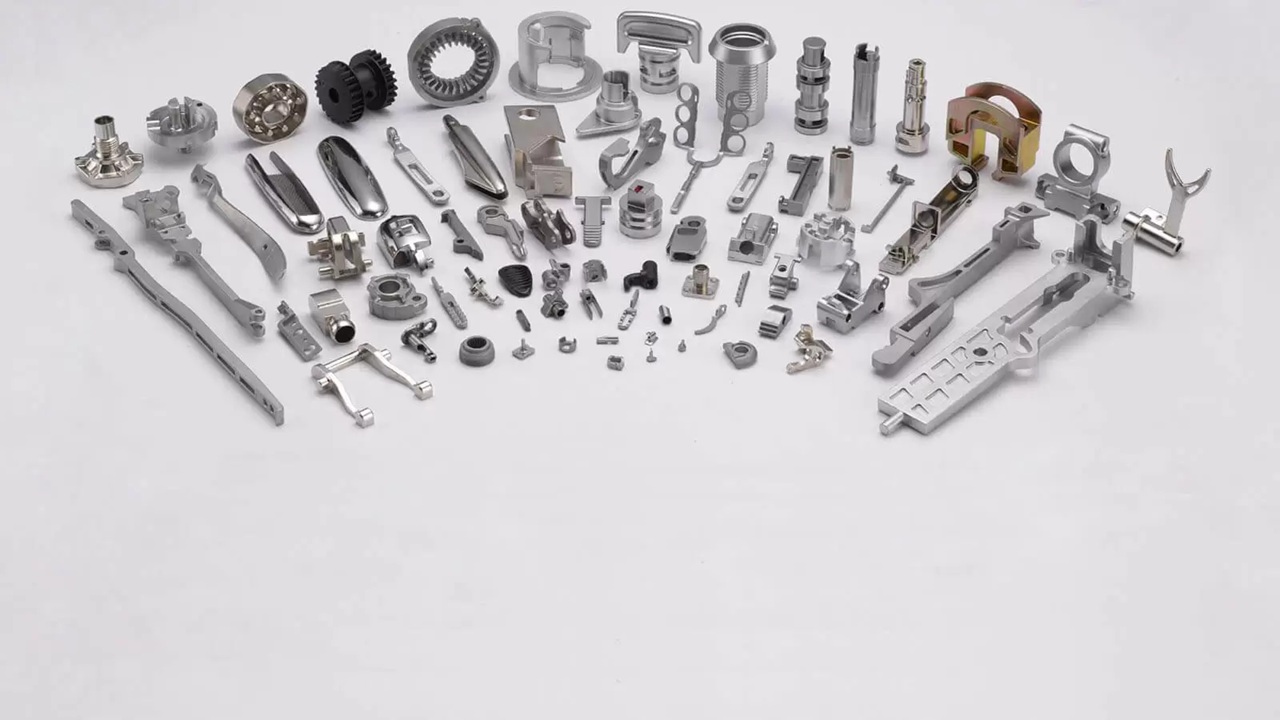
In an era where manufacturing precision can determine market success or failure, finding the right MIM manufacturer has become a strategic decision that reverberates throughout entire supply chains. The demand for components that marry complexity with accuracy has never been greater, pushing engineers and procurement teams to seek partners who understand not just the mechanics of production, but the human consequences of quality and reliability. For industries where failure is not an option, metal injection moulding represents more than a manufacturing technique; it embodies a commitment to excellence that touches lives in ways both visible and invisible.
The Foundation of High-Accuracy Manufacturing
Metal injection moulding stands at the intersection of art and science, where material knowledge meets process discipline. A proficient MIM manufacturer transforms fine metal powders into components through a carefully orchestrated process:
- Fine metal particles blend with polymer binders to create feedstock
- Precision injection moulds shape the material into “green parts”
- Debinding removes the polymer matrix, creating “brown parts”
- Sintering at controlled temperatures fuses metal particles into dense, strong components
One industry professional observes that “the precision of the dies allows manufacturers to form cases to near-net shape with exceptional repeatability,” highlighting how tooling quality directly translates into component consistency.
Industries Built on Precision
The reach of metal injection moulding extends across sectors where human wellbeing and safety hang in the balance:
• Healthcare
Surgical instruments, dental implants, orthodontic brackets and endoscopic devices that meet biocompatibility standards whilst delivering mechanical performance surgeons depend upon
• Automotive
Fuel injection components, transmission parts and sensor housings that must function reliably across millions of cycles and extreme temperature variations
• Consumer Electronics
Mobile phone hinges, SIM card trays and connector housings where miniaturisation meets structural integrity requirements
• Aerospace and Defence
Components requiring exceptional strength-to-weight ratios in demanding environments
A skilled MIM manufacturer serving these sectors understands that each component contributes to systems that transport families, enable commerce, restore health and connect communities. Asia’s manufacturing landscape has emerged as a global leader, with industry analysis confirming that “the MIM industry in Asia is the world’s largest, whether considered in terms of number of parts produced, sales turnover or production volume.”
The Technical Pillars of Accuracy
What enables a top-tier MIM manufacturer to consistently deliver components that meet exacting specifications? Several interconnected factors create the foundation:
• Material science expertise
Understanding how different metal powders behave during processing allows optimal feedstock formulations for specific applications
• Process control systems
Sophisticated monitoring throughout production tracks temperature, pressure and atmospheric conditions continuously, ensuring “the parts produced are similar” with reduced variation between runs
• Advanced tooling technology
Precision moulds enable thin walls, intricate internal features and complex surface geometries whilst reducing secondary operations
• Quality management infrastructure
ISO 9001 and ISO 13485 certifications provide frameworks, with leading facilities embedding quality consciousness throughout their organisations
Navigating Material Choices
The versatility of metal injection moulding manifests through extensive material options. Ferrous alloys, including various stainless steel grades and low-alloy steels, serve applications requiring corrosion resistance, magnetic properties or specific thermal expansion characteristics. Non-ferrous options expand possibilities further:
• Superalloys
Inconel for extreme temperatures in aerospace and energy applications
• Copper-based alloys
Thermal and electrical conductivity for electronics and heat management
• Tungsten heavy alloys
Density for counterweights and radiation shielding
• Titanium alloys
Biocompatibility and strength-to-weight advantages for medical and aerospace sectors
A knowledgeable MIM manufacturer guides customers through material selection, considering mechanical properties, processing characteristics, cost implications and supply chain reliability. As one Singapore-based expert notes, careful attention to material science enables manufacturers to “offer innovative solutions” that push the boundaries of what metal injection moulding can achieve.
The Economics of Precision
Understanding the cost structure helps businesses make informed decisions. Initial tooling investment can appear substantial, particularly for complex geometries. However, this upfront expenditure amortises across production volumes, making MIM increasingly attractive as quantities grow. For parts requiring thousands or millions of units, the per-component cost often proves competitive with alternative manufacturing methods.
The near-net-shape nature of MIM reduces material waste compared to machining from solid stock. Secondary operations become minimal or unnecessary, as parts emerge from sintering with dimensional accuracy and surface finishes suitable for many applications. One industry assessment confirms that “one supplier streamlines risk and accelerates market entry,” highlighting how consolidating production with a capable facility reduces complexity and speeds time to market.
Building Partnerships That Endure
Selecting a MIM manufacturer extends beyond comparing technical specifications and pricing. The relationship requires trust, communication and shared commitment to excellence. Leading facilities offer design assistance, helping engineers optimise component geometry for the MIM process. They provide material recommendations based on application requirements and maintain transparent quality documentation that satisfies regulatory demands.
For businesses navigating the complexities of modern manufacturing, working with an experienced MIM manufacturer provides stability in an uncertain landscape, ensuring that components meet the standards upon which reputations are built and maintained.
