

In a world flooded with flashy apps, blockbuster games, and immersive virtual realities, it’s easy to overlook the tranquil, enduring allure of classic card games. And yet, one particular game continues to captivate players across eras not merely for its simplicity but also for its surprisingly beneficial mental effects. I refer, of course, to the free version of Spider Solitaire, a game that’s served as a staple on personal computers for decades and is presently making a powerful comeback across digital platforms.
Whether you’re a gamer seeking to unwind with something more strategic, an aficionado of cards who values traditional gameplay, or an individual just searching for an intellectually stimulating pastime, free Spider Solitaire is greater than a nostalgic indulgence; it’s a potent cognitive instrument disguised as entertainment.
The Everlasting Appeal of Spider Solitaire
Spider Solitaire is a solitary card game that utilizes two decks of cards and challenges players to methodically arrange the cards in descending sequences of the same suit. Unlike Klondike Solitaire its more mainstream cousin Spider offers a more complex and rewarding experience. It’s a game demanding patience, logic, and long-term strategy.
One of the prime reasons free Spider Solitaire has remained so popular is accessibility. It’s available on basically every platform PCs, tablets, smartphones, and even web browsers. And with complimentary versions accessible online, players can enjoy it without spending a cent or downloading cumbersome software.
Why “Free” Matters
There’s a subconscious incentive in playing a game that’s both accessible and cost-free. The minimal barrier to entry encourages more frequent play, and the complimentary version still provides a full-fledged, immersive experience. This is especially appealing in a market where premium mobile games often come with irritating ads or pay-to-win mechanics.
Training Your Brain—One Move at a Time
What casual players often overlook is that Spider Solitaire offers more than mere entertainment—it supplies a true mental workout. Studies in the field of cognitive science have demonstrated that games involving strategic planning, pattern identification, and memory retention can help boost brain health and delay cognitive decline. Spider Solitaire satisfies all these criteria and beyond.
Strategic Foresight and Problem Solving
Distinct from many speed-centric video games that reward swift reactions, Free Spider Solitaire rewards patience and foresight. The player must evaluate the placement of every card and predict future actions. Every decision generates ripples, educating players to think several steps ahead—much like chess or Go.
The classic “undo” function in digital forms of Spider Solitaire is not merely a benefit. It’s a learning tool. It pushes players to explore different results, learn from mistakes, and craft more effective strategies. Gradually, this iterative learning process cultivates more robust decision-making talents.
Pattern Recognition and Visual Memory
Spider Solitaire also depends heavily on recognizing patterns—such as the sequence of suits, face values, and potential actions. With regular play, users start to see visual and logical patterns emerge, boosting memory retention and visual-spatial reasoning. These are identical mental abilities required in professions that demand analyzing complex systems, like software development or engineering.
How to Get Started With Free Spider Solitaire
If you’re new to the game or returning after a long absence, getting started is remarkably simple. Several platforms offer browser-based and downloadable forms of Free Spider Solitaire, no strings attached.
Recommended Platforms
Solitaire Bliss – Offers customizable difficulty levels, daily challenges, and clean interface design.
Microsoft Solitaire Collection – A go-to for many, available on Windows and mobile platforms, combining classic gameplay with modern aesthetics.
247 Spider Solitaire – A browser-based version with no registration or download required, perfect for quick breaks between meetings or when waiting for the bus. Each platform has different strengths, but they all provide the core gameplay experience that both novice and expert fans expect. The levels of difficulty vary from straightforward to complex, engaging players of all experience levels.
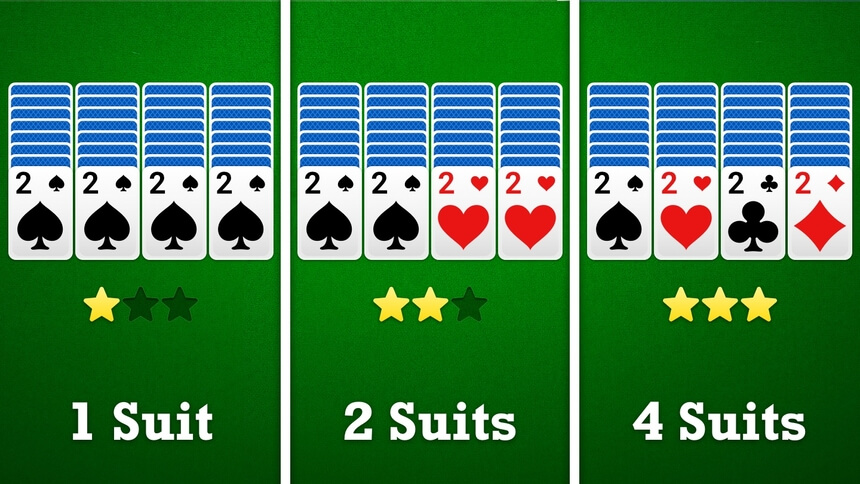
For beginners, One Suit mode offers straightforward gameplay with all cards of the same suit, making it easier to complete sequences. Those seeking more of a challenge can try Two Suits, which requires keeping track of alternating card suits. Only the most strategic of players will succeed at Four Suits, with its requirement to remember four suits simultaneously—a true test of memory and planning. Spider Solitaire’s scalable difficulty means players can start basic and gradually increase complexity as their abilities improve over time.
While Sudoku, crosswords and chess are classic choices for mental stimulation, Spider Solitaire offers compelling advantages. Requiring strategy, memory, foresight and pattern recognition, it provides a complete brain workout unlike many other games. New challenges emerge with every shuffled deck, keeping gameplay from becoming routine. Its mechanics are accessible yet mastery remains elusive. And unlike most brain games, it is entirely free and playable anywhere via browser.
Spider Solitaire offers a blend of logic and chance that engages the brain in diverse ways. While simple to learn, its puzzles allow for endless subtle strategies as one’s skills progress. Free to play online or via app, it provides mental stimulation without cost barriers.
In contrast, Lumosity presents mini-games targeting specific brain functions, yet the repetitive format risks dulling over time. The subscription model also introduces an ongoing expense where other options exist without charge.
Chess epitomizes strategic thinking, demanding foresight across long sequences of moves. However, its complexity poses a challenge for newcomers seeking an accessible starting point. Many training tools too come with price tags, limiting their appeal.
What sets Free Spider Solitaire apart is how it interweaves deductive reasoning, short-term memory, and tactical planning into a cohesive challenge. Rather than a brief distraction, it cultivates tenacity through enduring puzzles. This balance of versatility and availability without fees makes it more than a casual pastime for engaged players.
Think Things Through
Sometimes exploring different avenues, even if it means disrupting your current path, can lead to new insights.
Use the Undo Wisely
Rather than marching ahead without reflection, employ the undo function to test diverse trajectories and evaluate the results. It’s like your personal practice playground.
Free Spider Solitaire in the Digital Era
The burgeoning fondness for contemplative games like Spider Solitaire is no happenstance. As electronic overload and constant stimulation become customary, people are gravitating toward experiences that are low-anxiety yet mentally stimulating.
Evidence is starting to accumulate and preliminary research hints that playing games such as Free Spider Solitaire can alleviate anxiety, bolster focus, and even cultivate mindfulness. Unlike numerous modern games reliant on social assessment or in-app purchases, Spider Solitaire revolves around personal progress and intrinsic reward.
Moreover, the modern variations of the game encompass characteristics that buttress these benefits:
Daily Challenges maintain freshness and encourage regular involvement.
Minimalist Design helps reduce distraction and eyestrain.
Mobile Compatibility allows you to sneak in a quick session during lunch breaks or commutes.
A Socially Solitary Pastime
Ironically, though termed Solitaire, the game is anything but isolating. Online leaderboards, time challenges, and community forums have fabricated a vibrant network of players who share strategies, suggestions, and even screenshots of impressive games.
There are also blossoming YouTube and Twitch communities centered around classic games, where Spider Solitaire has found a surprisingly busy niche. Watching someone navigate a complex game at the highest difficulty can be just as satisfying as watching a speed run of an activity game.
Conclusion: The Quiet Power of a Classic
Free Spider Solitaire offers a focused solitary challenge in our noisy, fast-paced, always-connected world. It provides deep cognitive engagement without financial costs or an internet connection requirement.
You need only a few minutes and an inquisitive mind to enjoy this classic game. No game console, memberships, or WiFi required just a deck of cards.
Whether you’re a seasoned gamer seeking a new daily routine, an avid card player looking for a different type of puzzle, or someone wanting to keep their brain active and entertained, Free Spider Solitaire is there when you have some time. It’s complimentary, intelligent, and could become your new favorite way to sharpen your mind.
Ready to test your mental acuity? Try Free Spider Solitaire today and see how far your strategies and patience can take you in this solitary challenge.
About the Author